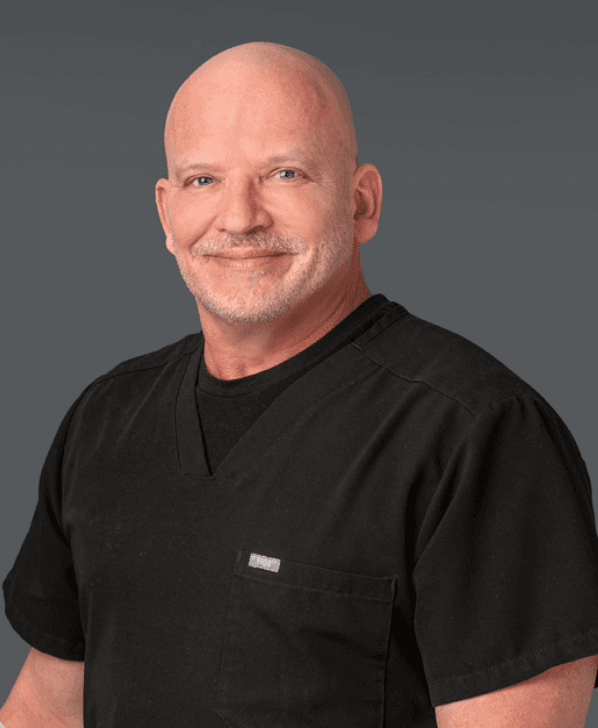
Written by: Steve Tieche MD
If you have been on thyroid medication for years and still feel exhausted, foggy, cold, puffy, moody, constipated, depressed, stuck with weight, losing hair, or just flat-out not like yourself…
You may not actually be getting the thyroid treatment your body needs.
And I know that sounds frustrating, because you may be thinking, “But my doctor already put me on thyroid medicine.”
Yes. Maybe they did. But the bigger question is this:
How do you feel?
That is one of our favorite questions at Recharge Clinic, and it is amazing how often patients are caught off guard by it.
They will say:
“Oh yeah, I have hypothyroidism. My other doctor handles that.”
So we ask:
“Okay, how do you feel?”
And the answer is usually something like:
“Terrible.”
Then we ask:
“Has your dose changed?”
And they say:
“No, I have been on the same dose for 10 years.”
Okay… how does that make sense?!
It does not.
You are telling your provider you still feel awful. You are still having symptoms. Your body is still screaming that something is off. But because your lab is “in range” or because you are already on levothyroxine or Synthroid, everybody acts like the case is closed.
That is not thyroid care.
That is checking a box and patients deserve better than that. Lets pick this all apart and understand this better.
Most traditional providers treat hypothyroidism with levothyroxine or Synthroid. Here is what patients are often not clearly told: Levothyroxine and Synthroid are T4-only thyroid medications.
This is important to understand.
T4 is one of the main thyroid hormones, but it is not the most active thyroid hormone your body uses. Your body has to convert T4 into T3, and T3 is the more active thyroid hormone that helps drive energy, metabolism, body temperature, brain function, mood, hair growth, bowel function, and so many of the things patients actually feel every single day.
Let me explain this a little easier to understand.
Think of T4 like the inactive or storage form of thyroid hormone.
Think of T3 like the active form your body actually uses.
Your body has to convert T4 into T3 so your cells can use it properly. That conversion can be affected by stress, inflammation, nutrient deficiencies, gut health, liver function, chronic dieting, hormone imbalances, illness, certain medications, and other metabolic issues.
So when a patient is only given a T4-only medication like Synthroid or levothyroxine, BUT their body does not convert T4 into T3 well, they may look “treated” on paper…
But still feel untreated in real life.
This is why someone can be on levothyroxine or Synthroid for 5, 10, even 20 years and still feel exhausted, foggy, cold, puffy, depressed, constipated, inflamed, and stuck with weight.
They are technically “on thyroid medication.” But their body may still not be getting enough active T3. And that is where so many patients get missed. Their provider looks at TSH, maybe looks at T4, sees something “in range,” and says, “You’re fine.”
But the patient is not fine.
They are dragging themselves through the day. They are gaining weight even when they barely eat. They are freezing when everyone else is comfortable. They are exhausted after a full night of sleep. They are foggy, emotional, frustrated, and wondering if they are crazy.
You are not crazy. Your thyroid treatment may just not be complete.
This is exactly why we do not stop at, “Well, you’re already on thyroid medicine.” We want to know what kind of thyroid medicine. We want to know what your labs actually show. And most importantly, we want to know: How do you feel?
Because here is what we hear all the time:
No. No. No.
Patients deserve better than being dismissed.
Let me explain a little bit about TSH
TSH stands for thyroid-stimulating hormone. It is not actually a thyroid hormone — it is a signal from your brain telling your thyroid how hard to work.
When your body does not have enough thyroid hormone, your brain usually sends out more TSH to “push” the thyroid. That is why TSH is often higher in hypothyroidism.
The part patients and even providers do not always understand: when you take thyroid medication, especially medication that gives your body thyroid hormone, your TSH will usually come down. That does not automatically mean something is wrong. It means your brain is sensing that thyroid hormone is available, so it does not need to scream at the thyroid as loudly.
This is also why we do not treat patients based on TSH alone. TSH matters, but it is only one piece of the puzzle. We also care about T4, T3, conversion, symptoms, and the most important question: how do you actually feel?
We hear this all the time.
And I say this with love, but also very bluntly:
If you feel terrible and your provider keeps telling you everything is fine, that is a problem.
If you have been on the same thyroid dose for years and nobody is asking how you feel, that is a problem.
If your symptoms are still there and nobody is checking deeper labs or discussing T4 to T3 conversion, that is a problem.
If your provider only knows how to prescribe one medication because that is what they were trained to prescribe, that is not personalized thyroid care.
That is a protocol. You are not a protocol. You are a person.
A person who wants energy back, wants to stop feeling cold and puffy and who wants to think clearly again.
A person who wants to lose weight without feeling like your body is fighting you every step of the way.
A person who wants someone to finally say, “Let’s look deeper.”
This one makes me crazy.
A patient gets diagnosed with hypothyroidism. They get placed on medication. Then they stay on the same dose for years and years, even though their body, hormones, stress, weight, age, lifestyle, inflammation, and health history have all changed.
Your thyroid treatment should be monitored. Your symptoms should be reviewed. Your labs should be interpreted with your real-life symptoms in mind. Your provider should care whether you actually feel better.
At Recharge, we are not just trying to get a lab number into a range. We are trying to help patients feel better, function better, and understand what is happening in their body.
That does not mean every patient needs T3. That does not mean every patient needs compounded thyroid medication.
But it does mean every patient deserves a real evaluation, and if on thyroid medication, they should be followed up with at least every four months!
When patients come to Recharge for thyroid concerns, we are not just looking at one number and sending them on their way.
We want to understand the full picture.
That may include symptoms, medication history, thyroid labs, hormone balance, inflammation, nutrient status, weight changes, energy, sleep, stress, and how long the patient has been struggling.
We want to know:
These questions matter.
Because thyroid care is not just about a lab report.
It is about the person attached to the lab report.
This is the part I wish more providers understood. Patients are not stupid, they know when their body does not feel right. They may not know the science and may not know what T4 and T3 are. They may not understand conversion or know which labs to ask for.
But they know they are tired, they are gaining weight, their hair is falling out, they are freezing, their brain is not working like it used to and they do not feel like themselves.
And instead of being dismissed, they should be listened to.
This is literally why Recharge exists.
If you have been on levothyroxine or Synthroid for years and still feel terrible, it may be time to have your thyroid looked at differently.
Not because your previous provider is a terrible person.
But because many traditional practices are not looking at or understanding the full thyroid picture. They are not always evaluating T4 to T3 conversion. They are not always asking the right questions. And they are definitely not always adjusting care based on how the patient actually feels.
At Recharge Clinic, we believe patients deserve more than “your labs are normal.”
And if your thyroid is part of the problem, we want to help you get answers.
You should not be told everything is fine when you know your body does not feel fine.
At Recharge Clinic, our providers may prescribe compounded thyroid medicine that contains both T4 and T3 when appropriate for the patient.
These medications are made by Recharge RX, our third-party tested compounding pharmacy. And there is a reason we built it.
For years, we struggled with patients being able to get the thyroid medications they needed. Prescriptions would be sent out, and then patients could not get them filled. Pharmacies did not offer them. Patients were calling around. Staff were chasing things down. Patients were frustrated, and honestly, we were frustrated too.
Because what is the point of taking the time to properly evaluate a patient, create a treatment plan, and prescribe what they need if they cannot even get the medication?
That is exactly why we built Recharge RX.
We wanted patients to have access to the medications our providers actually prescribe. We wanted quality control, and we wanted consistency. We wanted our patients to stop being stuck because the average pharmacy could not fill what they needed.
This is exactly why we built Recharge this way.
Recharge is a full-service medical clinic with providers who understand hormones, thyroid, labs, symptoms, and real patient care. And Recharge RX helps us take care of patients in a way that actually makes sense.
If you've been told your thyroid labs are normal but you still feel exhausted, foggy, cold, moody, puffy, or unable to lose weight, it may be time for a more complete conversation. As we discussed throughout this article, feeling "normal on paper" doesn't always mean you feel normal in real life.
Schedule a free consultation at Recharge Clinic or call 352-512-9996 to ask about comprehensive thyroid testing, hormone evaluation, vitamin levels, iron/ferritin, and whole-body care.
We have locations in Ocala, Lady Lake, and Clermont, along with telehealth appointments available throughout Florida. As a full-service medical clinic, we believe great care starts with listening.
We listen. We explain. We help patients get answers.
And we'd love to help you feel heard, cared for, and confident again.
If you haven't read our first blog, Is It Your Thyroid, Your Hormones, or Just Burnout?, it's the perfect place to start. It explains why so many symptoms of thyroid overlap with hormone imbalance, stress, and burnout—and why getting the right diagnosis matters.
Then stay tuned for the final article in this series:
Hypothyroidism vs. Hashimoto's: What's the Difference? Understanding Your Thyroid in Plain English
We'll break down one of the biggest sources of confusion we hear in the clinic—what hypothyroidism actually is, how Hashimoto's disease causes it, why they're not the same diagnosis, and what that means for your treatment and long-term health.
You won't want to miss it.
Levothyroxine and Synthroid are T4-only thyroid medications. Some patients do well on them, but others may still have symptoms if their body is not converting T4 into enough active T3. If you still feel tired, foggy, cold, puffy, or stuck with weight, your thyroid treatment may need a deeper evaluation.
T4 is more of a storage thyroid hormone. Your body has to convert T4 into T3. T3 is the more active thyroid hormone that your cells use for metabolism, energy, temperature regulation, mood, and many other functions. If that conversion is not working well, you may still have hypothyroid symptoms.
Yes. When appropriate, Recharge Clinic providers may prescribe compounded thyroid medication that includes T4 and T3. These medications are made through Recharge RX, our third-party tested compounding pharmacy.
Recharge started Recharge RX because patients were struggling to get certain prescribed medications filled, including thyroid medications. Many pharmacies did not offer the customized medications our providers used for patient care. Recharge RX helps improve access, consistency, and quality for our patients.
No. Not every patient needs compounded T4/T3 thyroid medication. The right treatment depends on symptoms, labs, health history, current medication, and how the patient responds. That is why a proper consultation and lab review are so important.
You should not ignore your symptoms. If you still feel exhausted, foggy, cold, puffy, or unable to lose weight, it may be time for a more complete thyroid evaluation. At Recharge Clinic, our providers look at labs and symptoms together because how you feel matters.
American Thyroid Association: Thyroid Hormone Treatment
FDA / DailyMed: Synthroid Prescribing Information
National Institutes of Health / PubMed Central: Thyroid hormone replacement and persistent symptoms in hypothyroidism
Join us for our FREE Wellness Talk: Hidden Issues – Thyroid Health
Dr. Tieche will explain why "normal" doesn't always mean optimal when it comes to thyroid health and discuss the hidden issues that may be affecting how you feel.
📅 Wednesday, August 12, 2026
🕕 6:00 PM
💻 Live via Zoom
Bring your questions! Dr. Tieche will host a live Q&A session following the presentation.
Please register below, and you'll receive your Zoom link prior to the event.
👉 https://rechargeclinics.com/talk


Monday: 8:00 am - 6:00 pm
Tuesday - Wednesday: 8:00 am - 5:30 pm
Thursday: 8:30 am - 6:30 pm
Friday: 8:00 am - 6:00 pm
Saturday: 7:45 am - 1:00 pm
After-hours appointments can be made.
Walk-ins are welcome.
Monday - Friday: 8:30 am - 5:30 pm
Walk-ins are welcome.
Monday - Friday: 8:30 am - 5:30 pm
Walk-ins are welcome.
Monday - Friday: 8:30 am-5:30 pm
Walk-ins are welcome.
Monday: 8:30 am - 5:30 pm
Tuesday: Telehealth Appts. Only
Wednesday - Friday: 8:30 am - 5:30 pm
Saturday & Sunday: Closed
Walk-ins Welcome
Monday - Wednesday 8 am - 6 pm
Thursday 8 am - 6:30 pm
Friday 8 am - 6 pm
Saturday 7:45 am - 1 pm
👻BOTOX & BOOs👻
OCTOBER 23
8:30 AM - 5:30 PM
3175 Citrus Tower Blvd, Bldg 3,
Ste B, Clermont, FL 34711
Celebrate Halloween at Recharge
Clinic in Clermont! Grab your friends,
enjoy drinks, and SCARY-GOOD specials!
IN-PERSON SPECIALS ONLY
- PLEASE RSVP BELOW
Recharge Rewards is our way of saying thank you to patients who trust us with their care. The more you visit, the more you earn. Check out how our program works: Click Here
Mondays - NAD+ Shot
Wednesdays - KETO Shot
Fridays - Fitness Freak Shot
SE Ocala 17th St:
Wednesdays – 3 pm - 5 pm
NW Ocala N HWY 27:
Mondays – 2 pm - 5 pm
SW Ocala SW HWY 200:
Tuesdays & Fridays – 2pm - 5 pm
Lady Lake:
Thursdays – 11 am - 3 pm
Clermont:
Mondays, Wednesdays, Thursdays, & Fridays – 2pm - 5pm
47 SW 17th St. , Ocala, FL 34471:
Wednesdays 11 am - 2 pm
3175 Citrus Tower Blvd, Bldg 3, Suite B, Clermont, Fl 37411:
Mondays, Wednesdays, Thursdays, & Fridays 11 am - 2 pm
CLERMONT CLINIC HOURS
Monday - 8:30 AM - 5:30 PM
Tuesday - Telehealth Appts. Only
Wedensday - 8:30 AM - 5:30 PM
Thursday - 8:30 AM - 5:30 PM
Friday - 8:30 AM - 5:30 PM
Walk-ins Welcome
3175 Citrus Tower Blvd, Bldg 3, Ste B, Clermont, FL 34711