Written by: Cynthia Tieche
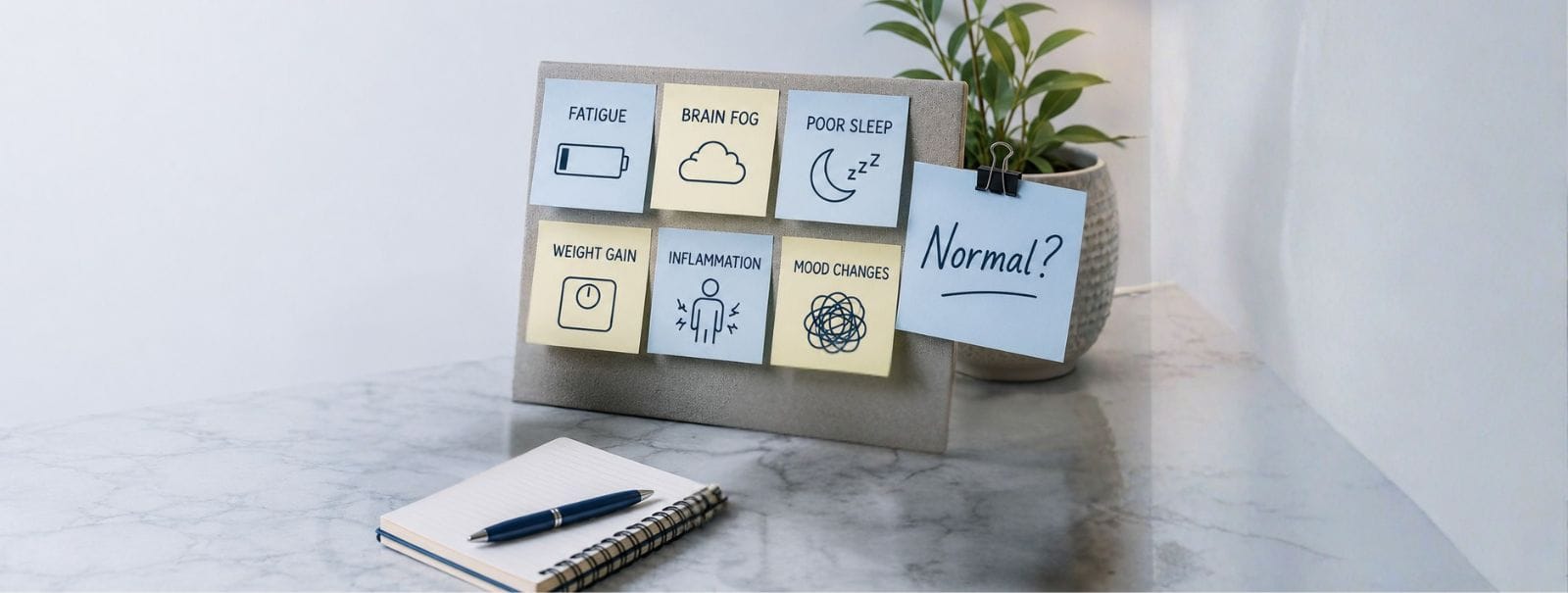
Feeling tired all the time is not normal.
I know people say it is.
They say:
And yes, life is a lot. Stress is real. Schedules are packed. Hormones change. Sleep is not always perfect. But here is the truth: you should not feel like you are dragging yourself through every single day.
We hear this all the time at Recharge Clinic.
Patients come in saying:
And so many of them have already been told the same frustrating thing:
“Your labs are normal.”
But they still feel terrible.
That is where blood work can be incredibly helpful — when it is ordered thoughtfully, reviewed properly, and combined with actually listening to the patient.
Because labs matter.
But labs are not the whole patient.
At Recharge Clinic, we use lab work every single day.
Labs help us look at thyroid function, hormones, vitamins, iron, CBC, CMP, inflammation, metabolic health, blood sugar patterns, and other markers that may help explain why someone does not feel well.
But here is the truth: a person is not just a number on a page.
Lab work gives us information. It gives us clues. It gives us an objective starting point.
But the patient sitting in front of us matters just as much.
That is why one of the most common questions we ask at Recharge is:
How do you feel?
Symptoms matter. Patient history matters. Medications matter. Sleep matters. Stress matters. Nutrition matters. Hormones matter. Follow-up matters.
A lab range can be huge. Just because someone is technically “in range” does not always mean they are optimized. Some patients may be sitting at the bottom of a range and feel awful, while another patient may feel fine there.
That does not mean we ignore safety or chase perfect numbers.
It means we look at the whole picture.
That is the difference.
When a patient comes to Recharge with fatigue, weight gain, brain fog, low libido, mood changes, poor sleep, hair loss, inflammation, or stubborn symptoms, we may recommend different labs based on their history and what they are experiencing.
That may include:
A CBC, or complete blood count, looks at different blood cells, including red blood cells, white blood cells, platelets, hemoglobin, and hematocrit. It is commonly used as part of routine care and can help providers evaluate or monitor certain health concerns.
A CMP, or comprehensive metabolic panel, measures 14 substances in the blood and gives information about metabolism, blood sugar, electrolytes, proteins, liver markers, kidney markers, and chemical balance.
Thyroid blood tests may include markers such as TSH, T3, T4, and thyroid antibodies, depending on the patient’s symptoms and provider recommendations. These tests can help evaluate thyroid function and thyroid-related concerns.
Blood sugar testing may also matter. The CDC explains that an A1C test reflects average blood sugar over the past 2–3 months and is used to diagnose prediabetes and diabetes and monitor blood sugar management.
None of these labs should be looked at alone like one random puzzle piece.
Good care means looking at patterns.
Fatigue is one of the biggest reasons patients come to Recharge.
And fatigue can be tricky because it can come from many different places.
It may be related to:
This is why telling someone, “Your labs are normal,” without really looking deeper can be so frustrating.
A patient may have a thyroid marker that is technically in range but not ideal for them. Another patient may have low ferritin or vitamin D. Another may have blood sugar patterns that are affecting energy. Another may have hormone changes that are impacting sleep, mood, motivation, and muscle.
And sometimes labs look okay, but the patient’s lifestyle, stress, sleep, nutrition, or medical history gives us the missing piece.
That is why labs are a tool, not the entire answer.
Let’s talk about weight, because this is where a lot of patients feel judged.
A patient comes in and says, “I am doing the things. I am trying. I am eating better. I am moving. I am working hard. But the weight will not move.”
And too often, they are treated like they are lying or not trying hard enough.
Patients deserve better than that.
Weight gain and stubborn weight loss can be connected to many things, including:
This does not mean labs magically solve weight loss.
But blood work can help us understand what may be working against the patient.
For example, metabolic markers can help us look at blood sugar patterns. Thyroid labs can help us evaluate thyroid function. Hormone labs may help us understand changes that affect energy, muscle, sleep, mood, and body composition. Vitamin and iron markers may help explain why a patient has no energy to exercise or recover well.
At Recharge, we do not look at weight loss as one tiny issue.
We look at the whole patient.
Because if someone is exhausted, inflamed, sleeping poorly, hormonally off, low in key nutrients, or metabolically struggling, telling them to “just eat less and move more” is lazy care.
I said what I said.
Hormones can affect energy, mood, sleep, libido, motivation, muscle, recovery, skin, hair, mental clarity, and weight.
This is true for women and men.
Women may notice changes with perimenopause, menopause, cycle changes, low testosterone, estrogen shifts, progesterone issues, thyroid changes, stress, and nutrient deficiencies.
Men may notice fatigue, low libido, low motivation, weight gain, muscle loss, brain fog, poor recovery, irritability, or just feeling flat.
But hormone labs need context.
Timing matters. Symptoms matter. Medications matter. Supplements matter. Age matters. Patient history matters. Cycles matter. Whether someone is already on hormone therapy matters.
This is why hormone labs should not be interpreted casually or blindly.
At Recharge, we have been practicing hormone therapy and whole-body care for more than 11 years, and we are still learning every single day from our patients.
That is how complex this is.
And that is why patients should not feel like they have to figure this out alone.
The thyroid is one of the trickiest systems we treat because it affects so many parts of the body.
Energy.
Metabolism.
Weight.
Mood.
Hair.
Skin.
Body temperature.
Bowels.
Heart rate.
Brain fog.
Sleep.
Hormones.
A patient with thyroid issues may feel exhausted, cold, foggy, constipated, puffy, moody, anxious, or stuck with weight loss.
But thyroid testing can be more complicated than only glancing at one number.
Sometimes patients have only had TSH checked. Sometimes they have never had T3 or T4 reviewed. Sometimes antibodies may be appropriate. Sometimes medications or supplements can affect results. The American Thyroid Association notes that biotin, a common supplement, can interfere with certain thyroid blood tests and may cause results to appear abnormal when thyroid levels are actually normal in the blood.
That is why experience matters.
We do not want to over-treat. We do not want to under-treat. We do not want to guess.
We want to evaluate carefully, listen closely, and follow up.
Sometimes patients are shocked to learn how much vitamin and iron status can affect how they feel.
Low or suboptimal vitamin levels may contribute to fatigue, weakness, poor immune function, mood changes, hair concerns, or poor recovery depending on the vitamin and the patient.
Vitamin D is one example. MedlinePlus explains that a vitamin D test checks vitamin D levels in the blood, and very low levels can affect bone health and may be associated with other health concerns.
Iron and ferritin can also matter, especially for patients who feel exhausted, weak, short of breath with exertion, dizzy, cold, or unable to recover well. This is not something to guess about. Too little iron can be a problem, and too much iron can also be a problem.
That is why testing and provider guidance matter.
Do not just throw random supplements at symptoms and hope for the best.
Let’s look. Let’s think. Let’s explain. Let’s follow up.
That is the Recharge way.
Lab interpretation is not just checking whether a number is red, green, high, or low.
That is not enough.
A good provider needs to understand what labs were ordered, why they were ordered, when they were drawn, what medications or supplements the patient takes, what symptoms are present, what changed over time, what needs follow-up, and what is safe.
This is exactly why Recharge invests so much time into provider training.
Many providers, including nurse practitioners, physician assistants, and even physicians, have very little or no training in functional medicine, hormone therapy, thyroid optimization, vitamin optimization, and whole-body care.
That is not always their fault. Traditional medical training often does not go deep enough into these areas, and a few online courses are not enough to fully understand the body systems, risks, side effects, and how to adjust treatment safely.
At Recharge, we do not just hire a provider and throw them into patient care.
We train our providers intensively for six months or longer because we want patients to receive thoughtful, thorough, consistent care across Recharge locations.
Patients are tired of being told, “Everything looks normal,” when they still feel terrible.
They are tired of not being heard.
They are tired of being treated like the only thing that matters is whether their number barely fits inside a lab range.
Recharge exists because patients deserve better than that.
Start with Your Labs Are “Normal”… So Why Do You Still Feel Terrible?
Then continue with Why Recharge Offers In-House and At-Home Labs: Easier Testing, Better Pricing, and Provider Guidance
Scheduling with Recharge Clinic is simple.
You can call 352-512-9996 or book an appointment online through the Recharge Clinic website. Recharge also welcomes walk-ins at select locations, depending on the service and availability.
When you schedule, let the team know you are interested in learning more about lab work. From there, we can help guide you through the next steps, review your labs, and discuss what may be appropriate for you.
Fatigue can have many possible causes, so the right labs depend on the patient. A provider may consider CBC, CMP, thyroid markers, hormone labs, vitamin levels, iron and ferritin, blood sugar markers, and other labs based on symptoms and medical history.
Yes, blood work can sometimes help identify patterns related to thyroid function, hormones, blood sugar, insulin resistance, inflammation, vitamins, iron, and metabolic health. Labs are not the whole answer, but they can be an important tool.
Recharge Clinic offers thyroid lab testing options at our clinic locations. Depending on the patient, thyroid testing may include TSH, T3, T4, and sometimes thyroid antibodies. Your provider can help decide what is appropriate.
Yes. Recharge Clinic offers hormone labs for patients when clinically appropriate. Hormone labs should be reviewed with symptoms, timing, medications, health history, and provider guidance.
Full panel labs may include CBC, CMP, thyroid markers, hormones, and some vitamin levels, depending on what your provider recommends. Lab needs vary by patient.
Yes. Recharge Clinic providers review lab results with the patient’s symptoms, history, medications, and goals in mind. We do not want patients guessing alone. We explain results, discuss options, and help patients understand next steps.


Monday: 8:00 am - 6:00 pm
Tuesday - Wednesday: 8:00 am - 5:30 pm
Thursday: 8:30 am - 6:30 pm
Friday: 8:00 am - 6:00 pm
Saturday: 7:45 am - 1:00 pm
After-hours appointments can be made.
Walk-ins are welcome.
Monday - Friday: 8:30 am - 5:30 pm
Walk-ins are welcome.
Monday - Friday: 8:30 am - 5:30 pm
Walk-ins are welcome.
Monday - Friday: 8:30 am-5:30 pm
Walk-ins are welcome.
Monday: 8:30 am - 5:30 pm
Tuesday: Telehealth Appts. Only
Wednesday - Friday: 8:30 am - 5:30 pm
Saturday & Sunday: Closed
Walk-ins Welcome
Monday - Wednesday 8 am - 6 pm
Thursday 8 am - 6:30 pm
Friday 8 am - 6 pm
Saturday 7:45 am - 1 pm
👻BOTOX & BOOs👻
OCTOBER 23
8:30 AM - 5:30 PM
3175 Citrus Tower Blvd, Bldg 3,
Ste B, Clermont, FL 34711
Celebrate Halloween at Recharge
Clinic in Clermont! Grab your friends,
enjoy drinks, and SCARY-GOOD specials!
IN-PERSON SPECIALS ONLY
- PLEASE RSVP BELOW
Recharge Rewards is our way of saying thank you to patients who trust us with their care. The more you visit, the more you earn. Check out how our program works: Click Here
Mondays - NAD+ Shot
Wednesdays - KETO Shot
Fridays - Fitness Freak Shot
SE Ocala 17th St:
Wednesdays – 3 pm - 5 pm
NW Ocala N HWY 27:
Mondays – 2 pm - 5 pm
SW Ocala SW HWY 200:
Tuesdays & Fridays – 2pm - 5 pm
Lady Lake:
Thursdays – 11 am - 3 pm
Clermont:
Mondays, Wednesdays, Thursdays, & Fridays – 2pm - 5pm
47 SW 17th St. , Ocala, FL 34471:
Wednesdays 11 am - 2 pm
3175 Citrus Tower Blvd, Bldg 3, Suite B, Clermont, Fl 37411:
Mondays, Wednesdays, Thursdays, & Fridays 11 am - 2 pm
CLERMONT CLINIC HOURS
Monday - 8:30 AM - 5:30 PM
Tuesday - Telehealth Appts. Only
Wedensday - 8:30 AM - 5:30 PM
Thursday - 8:30 AM - 5:30 PM
Friday - 8:30 AM - 5:30 PM
Walk-ins Welcome
3175 Citrus Tower Blvd, Bldg 3, Ste B, Clermont, FL 34711