
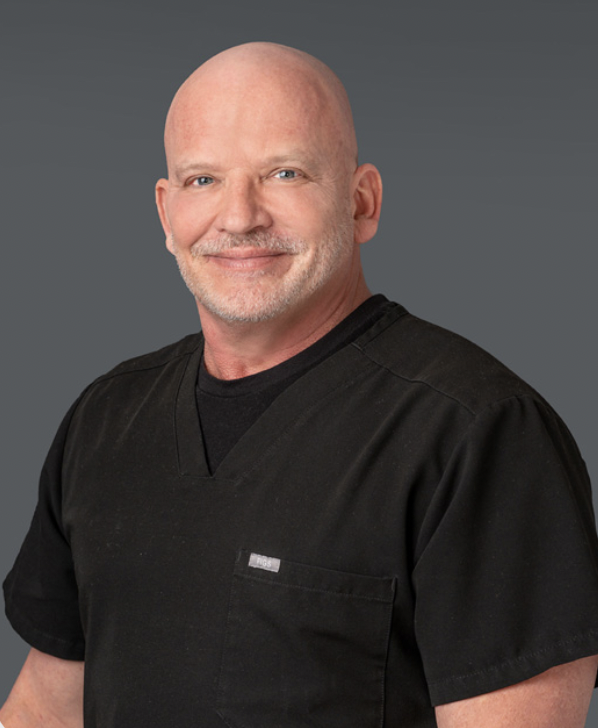
By Dr. Steve Tieche, Co-Founder of Recharge Clinic
After weeks of believing I probably had prostate cancer, I finally received the news we had been praying for. Every single sample from my prostate biopsy came back benign. No cancer was found.
The relief was tremendous. But apparently, I needed a little convincing because I kept reading the report over and over again. In fact, I woke up in the middle of the night and pulled it up one more time just to make sure I hadn't misunderstood what it said. By then, I had probably read the results twenty times!
I've been a physician for many years, and I've helped countless patients work through abnormal lab results, concerning scans, and cancer scares. I've reassured patients who were frightened, explained what their results meant, and helped them understand what needed to happen next. But this time, I was the patient, and I learned that knowing what to expect medically doesn't necessarily prepare you for what it's like to experience it personally.
My prostate biopsy was performed on a Friday. I had been told I would have a follow-up appointment in approximately two weeks to discuss the findings, but on Monday, I received a notification that the pathology results were available in my patient portal.
I was at the clinic when the notification came through. Naturally, I opened it immediately. I wasn't about to wait another two weeks to find out what it said.
As I started reading, I saw the same words repeated throughout the report: "Benign prostatic tissue." All sixteen specimen groups, including the suspicious areas identified on my MRI, were negative for cancer.
I was stunned. For weeks, I had been preparing myself for a prostate cancer diagnosis. My MRI had identified several highly suspicious areas, and the report had indicated that clinically significant cancer was highly likely. Even though I knew a biopsy was necessary to confirm a diagnosis, I had already started thinking about surgeons, treatment options, recovery, and how my life might change.
I had spent quite a bit of time researching what I would do if the biopsy confirmed cancer. I had thought through different treatment options and the potential side effects. In my mind, I was already several steps ahead, preparing myself for something that hadn't actually been diagnosed.
And now, after all that worrying and planning, every sample was benign.
I remember feeling tremendous relief and thankfulness. I had hoped for these results, and I had prayed for them, but I honestly hadn't expected them.
I called Cynthia almost immediately. She was standing in the checkout line at Publix when I told her the results were back and everything was benign.
Her first reaction was disbelief.
She had read the MRI report herself, and she knew how concerning those findings had been. Like me, she had been preparing for the possibility that I had prostate cancer. When I told her everything was negative, she kept asking whether I was sure.
I assured her that I had read the report several times. She pulled it up herself, enlarged the image on her phone, and read through the findings.
I think we were both shocked, but in the best possible way. For weeks, we had been praying and hoping for this outcome. And now that we had received it, it was almost difficult to believe.
That feeling stayed with me throughout the day. I knew what the pathology report said, but after spending so much time preparing myself for cancer, I kept going back to make sure I was reading it correctly.
Thats when later that night, I woke up and looked at it again. There it was, exactly as I had read it before.
Benign prostatic tissue.
What made this experience particularly emotional for our family was everything we had already been through.
Earlier that summer, Cynthia had been diagnosed with a pituitary tumor and had undergone surgery. While she was going through testing and preparing for that procedure, I was having my PSA rechecked and trying to determine why it had increased so much from my previous results.
I had deliberately waited until after her surgery to have my MRI. I didn't want to add another concern to an already stressful time. Unfortunately, when the MRI results came back, they were far more concerning than I had anticipated.
I remember being upset, not only because of what the report said, but because I couldn't believe we were facing another serious medical situation so soon after Cynthia's surgery. It felt like one more thing we really didn't need.
Cynthia remembers me looking at her and saying, "You just had a miracle. Now I need a miracle."
I don't remember my exact words, but I certainly remember praying about it. I prayed for the best outcome, and I felt a sense of peace afterward. I knew we still had to go through the biopsy and wait for the results, but I had reached a point where I was no longer going to let the uncertainty consume me.
Cynthia was praying every day too. She had just come through her own experience with a tremendous amount of faith, and that helped both of us through mine.
We never stopped taking the necessary medical steps. We scheduled the biopsy, went through the procedure, and waited for the pathology. But throughout that time, prayer helped us remain hopeful.
When those benign results arrived, we were incredibly thankful. After everything we had been through that summer, it truly felt like another answered prayer.
One of the things I found interesting about this experience was how many of my own patients' frustrations I suddenly understood on a personal level.
I've been on the other side of these conversations for years. I know how frequently PSA levels can change, and I know that an abnormal result doesn't automatically mean cancer. I've helped patients understand why we repeat certain tests and why additional imaging or a biopsy may be necessary.
But when you're the patient, you aren't just thinking about the medical explanation. You're thinking about your family, your future, and what might be happening inside your body while you're waiting for answers.
Even the process of getting an appointment was frustrating. We were fortunate to have people in our office making repeated calls to help me get scheduled, but it still took weeks to get my biopsy. There were times when I wanted to know why we couldn't just get it done immediately.
I've heard patients express that same frustration many times. They have an abnormal result, they know something needs to be investigated, and then they have to wait for an appointment. After that appointment, sometimes there's another test and another period of waiting.
It's not always easy to be patient when you are worried about your health.
I wouldn't say this experience completely changed how I practice medicine. I've always taken abnormal results seriously and encouraged my patients to follow through with recommended testing. But it certainly reinforced how important it is to help people understand the process and support them while they're going through it.
I also learned how easy it is to convince yourself that you already know the outcome. By the time I had my biopsy, I was fairly certain I had prostate cancer. I had seen the MRI report, understood the findings, and already started preparing for treatment.
And I was wrong.
That's something worth remembering. A concerning result is not the same thing as a confirmed diagnosis. Until you have the answers, you don't know how the story is going to end.
As relieved as I was to receive benign results, the biggest message I want to share isn't really about the biopsy at all.
It's about why I had the testing done in the first place.
I wasn't feeling sick. I wasn't experiencing any new symptoms that made me suspect something was wrong. I was working, seeing patients, spending time with my family, and going about my normal life.
The change in my PSA was discovered during routine bloodwork.
I've always been diligent about monitoring my health. I have my labs checked regularly, and because of that, I had years of previous results to compare. My PSA had consistently been around 1.2 to 1.5. When it suddenly increased to approximately 4, I knew that was a significant change for me.
Had I not been getting my labs checked, I wouldn't have known that change had occurred. I wouldn't have had a reason to investigate it further because physically, I felt exactly the same.
Fortunately, my biopsy was benign. But what if it hadn't been?
If I had simply assumed I was healthy because I felt good, I could have missed an opportunity to identify a serious problem earlier.
That's why I'm such a strong believer in routine care and appropriate preventive testing. It doesn't mean everyone needs every test or that everyone needs the same laboratory schedule I follow. It means having a relationship with a medical provider who knows your history, understands your risk factors, and can help determine what testing is appropriate for you.
And just as importantly, it means following through when something doesn't look right.
I see patients who haven't had routine medical care in years. Many of them feel great, and that's wonderful. But feeling good doesn't necessarily mean that everything happening inside your body can be evaluated by symptoms alone.
I also see patients who receive abnormal results and delay further testing because they're frightened of what they might find out.
I understand that fear a little better now.
But I would encourage anyone in that situation to continue the evaluation. You might receive news you didn't want, but you might also receive news much better than you expected.
I certainly did.
Looking back, I spent weeks thinking I probably had prostate cancer. I had researched surgeons and considered treatment options before I even had a confirmed diagnosis. I prepared myself for the worst while continuing to hope and pray for the best.
And then I opened that pathology report and read the word "benign."
I am incredibly thankful for that outcome, and I will continue to follow up with my medical providers as recommended. But I hope my experience encourages someone else to make the appointment they've been putting off, get the routine testing their provider recommends, or follow through on an abnormal result they've been avoiding.
You cannot always control what a medical test will reveal, but you can take an active role in your health.
And sometimes, the answer you've been afraid to hear turns out to be the answer you've been praying for.
No. I had experienced symptoms related to an enlarged prostate for years, but I hadn't noticed anything new. The change in my PSA was identified through bloodwork, not because I felt sick or experienced new symptoms.
No. PSA can increase for several reasons, including benign prostate enlargement and inflammation. An elevated result needs to be evaluated in the context of your medical history, previous lab results, and other findings.
Some medical conditions can develop without obvious symptoms. Your provider can help determine which labs and preventive screenings are appropriate for you based on your age, medical history, and individual risk factors. Having previous results may also help identify meaningful changes over time.
Contact your provider and discuss the next step. Depending on the result, that might involve repeating a test, having additional testing performed, or seeing a specialist. The important thing is not to ignore it simply because you feel fine.
Absolutely. At Recharge Clinic, we work with patients to review their medical history, discuss appropriate lab work and screenings, and evaluate results together. If further testing or specialist care is needed, we can help guide you through the next steps. We have locations in Ocala, Lady Lake/The Villages, and Clermont, Florida.
I've spent many years encouraging my patients to take their health seriously. After going through this experience myself, I hope my story encourages you to do the same.
Whether you haven't had routine lab work in years, have questions about a recent result, or simply want to be more proactive about your health, we're here to help.
Schedule an appointment with Recharge Clinic at one of our locations in Ocala, Golden Hills, Lady Lake/The Villages, or Clermont, or ask about our Florida telehealth options.
Don't wait until something feels wrong to start paying attention to your health.
Dr. Steve Tieche
Co-Founder, Recharge Clinic


Monday: 8:00 am - 6:00 pm
Tuesday - Wednesday: 8:00 am - 5:30 pm
Thursday: 8:30 am - 6:30 pm
Friday: 8:00 am - 6:00 pm
Saturday: 7:45 am - 1:00 pm
After-hours appointments can be made.
Walk-ins are welcome.
Monday - Friday: 8:30 am - 5:30 pm
Walk-ins are welcome.
Monday - Friday: 8:30 am - 5:30 pm
Walk-ins are welcome.
Monday - Friday: 8:30 am-5:30 pm
Walk-ins are welcome.
Monday: 8:30 am - 5:30 pm
Tuesday: Telehealth Appts. Only
Wednesday - Friday: 8:30 am - 5:30 pm
Saturday & Sunday: Closed
Walk-ins Welcome
Monday - Wednesday 8 am - 6 pm
Thursday 8 am - 6:30 pm
Friday 8 am - 6 pm
Saturday 7:45 am - 1 pm
👻BOTOX & BOOs👻
OCTOBER 23
8:30 AM - 5:30 PM
3175 Citrus Tower Blvd, Bldg 3,
Ste B, Clermont, FL 34711
Celebrate Halloween at Recharge
Clinic in Clermont! Grab your friends,
enjoy drinks, and SCARY-GOOD specials!
IN-PERSON SPECIALS ONLY
- PLEASE RSVP BELOW
Recharge Rewards is our way of saying thank you to patients who trust us with their care. The more you visit, the more you earn. Check out how our program works: Click Here
Mondays - NAD+ Shot
Wednesdays - KETO Shot
Fridays - Fitness Freak Shot
SE Ocala 17th St:
Wednesdays – 3 pm - 5 pm
NW Ocala N HWY 27:
Mondays – 2 pm - 5 pm
SW Ocala SW HWY 200:
Tuesdays & Fridays – 2pm - 5 pm
Lady Lake:
Thursdays – 11 am - 3 pm
Clermont:
Mondays, Wednesdays, Thursdays, & Fridays – 2pm - 5pm
47 SW 17th St. , Ocala, FL 34471:
Wednesdays 11 am - 2 pm
3175 Citrus Tower Blvd, Bldg 3, Suite B, Clermont, Fl 37411:
Mondays, Wednesdays, Thursdays, & Fridays 11 am - 2 pm
CLERMONT CLINIC HOURS
Monday - 8:30 AM - 5:30 PM
Tuesday - Telehealth Appts. Only
Wedensday - 8:30 AM - 5:30 PM
Thursday - 8:30 AM - 5:30 PM
Friday - 8:30 AM - 5:30 PM
Walk-ins Welcome
3175 Citrus Tower Blvd, Bldg 3, Ste B, Clermont, FL 34711