
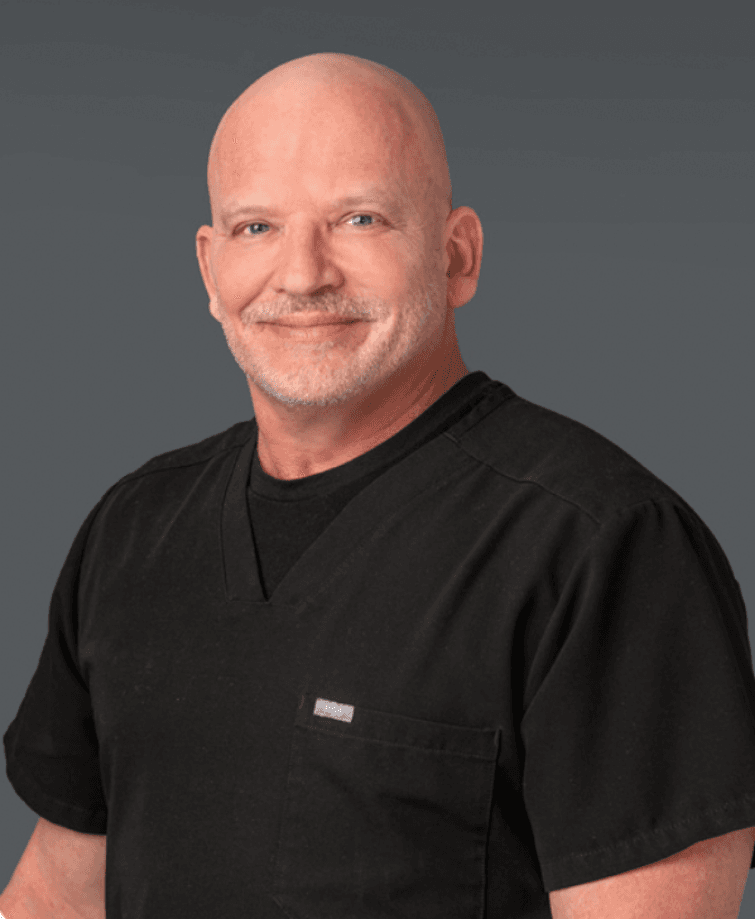
By Dr. Steve Tieche, Medical Director and Co-Founder of Recharge Clinic
I am always surprised by how casually some people dismiss reactions to gluten.
“That is not a real thing.”
“It is just a trend.”
“A little cross-contamination cannot possibly matter.”
Come spend one meal in my house.
Two of my daughters have strong reactions to foods containing gluten or wheat. One of them has celiac disease. They are strong, active young women—not fragile, dramatic or imagining symptoms because they saw something on social media.
One can develop hives almost immediately, even after cross-contact in a shared kitchen. The other develops gastrointestinal symptoms quickly.
Their thyroid labs are different too. One has an extremely high TPO antibody level that strongly supports the autoimmune picture. The other does not have that same dramatic TPO elevation.
Same family. Very different reactions and laboratory patterns. Patients do not always read the textbook before showing us what is happening in their bodies.
People use the words allergy, intolerance and sensitivity interchangeably, but medically they are not the same.
Celiac disease is an autoimmune disease triggered by gluten in wheat, barley and rye. It damages the small intestine and can affect nutrient absorption. Strict gluten avoidance is the treatment.
Wheat allergy can cause rapid hives, swelling, vomiting, breathing difficulty or, in severe cases, anaphylaxis. Immediate hives are not something to “test” casually at home. They deserve evaluation by an allergist.
Non-celiac gluten or wheat sensitivity describes symptoms that improve when certain foods are removed after celiac disease and wheat allergy have been excluded. There is no single confirming blood test, and other components of wheat-containing foods may contribute.
The labels matter because the testing, risk and required level of avoidance are different. The patient’s experience matters too.
Hashimoto’s is an autoimmune disease. So is celiac disease.
Autoimmune conditions can cluster, and people with Hashimoto’s have a higher likelihood of having another autoimmune disorder, including celiac disease.
That does not mean everyone with Hashimoto’s has celiac disease. But we should ask better questions when a thyroid patient also reports bloating, bowel changes, abdominal pain, unexplained iron deficiency, a persistent rash or difficulty stabilizing thyroid medication. Digestive disease can affect how medication and nutrients are absorbed.
If you want the basic distinction between the autoimmune disease and the thyroid function it may eventually impair, start with Hypothyroidism vs. Hashimoto’s: What’s the Difference?.
This is important.
Best-case scenario, if celiac disease is a possibility and you are still eating gluten, talk with a medical provider before going fully gluten-free. Celiac blood testing is most accurate while a patient is still eating gluten. Removing it first can lower antibodies and make the results harder to interpret.
The usual first-line blood evaluation includes tissue transglutaminase IgA, or tTG-IgA, together with total IgA when appropriate. Additional testing or an intestinal biopsy may be considered depending on the situation.
But let’s be realistic. Many people stop eating gluten because they already know it is making them feel awful—often before anyone suggests celiac testing. My daughters did. Once one of them recognized that even cross-contact could trigger hives and the other connected gluten with immediate gastrointestinal symptoms, asking them to start eating it again just to make testing easier was not realistic.
We also noticed a major change after adding probiotics and prebiotics to my daughters’ routines: their skin reactions after accidental cross-contact improved drastically. I am sharing that because it mattered in our family—not because it proves that probiotics or prebiotics can prevent a gluten or wheat reaction. The evidence is not strong enough to use them as protection from exposure, and they do not replace medical evaluation or careful avoidance. My daughters still take cross-contact seriously.
If you have already removed gluten, that does not mean the conversation is over. Tell your provider exactly what happened, how quickly symptoms appeared, whether cross-contact caused a reaction and how long you have been gluten-free. Depending on the situation, a provider may review earlier records, consider genetic testing for HLA-DQ2 or HLA-DQ8, evaluate for wheat allergy or recommend a gastroenterology or allergy consultation. A negative HLA-DQ2/DQ8 result makes celiac disease very unlikely, but a positive result does not diagnose it.
Do not restart gluten on your own after hives, breathing symptoms or another potentially serious immediate reaction. That needs an individualized medical plan.
So yes, testing first is ideal when it is still an option. But when someone has already stopped gluten because of a clear reaction, we work carefully with the history and the testing options that remain. We do not pretend the reaction was imaginary, and we do not casually tell the patient to go home and trigger it again.
A negative celiac test does not prove that every reaction is fake.
It may mean celiac disease is not the explanation. Wheat allergy, non-celiac gluten sensitivity, irritable bowel syndrome, FODMAPs or another digestive issue may still be involved. It may also mean the test was performed after gluten had already been removed or the situation needs further evaluation.
This is another version of the same lesson we see in thyroid care: one normal test can be useful without answering every possible question.
We do not ignore laboratory evidence. We also do not pretend it can describe every meal, rash and trip to the bathroom.
Here is a pattern we see all the time.
Someone starts a ketogenic or very low-carbohydrate diet. They remove bread, pasta, baked goods and many processed foods—often without thinking of it as a gluten-free experiment.
They feel dramatically better: less bloated and puffy, clearer skin, calmer eczema and steadier energy. Then they have a “cheat” meal loaded with bread or pasta, and the symptoms roar back.
Patients often say, “I felt great on keto, so carbohydrates must be the problem.” Maybe. But what exactly changed?
Was it gluten? Wheat? FODMAPs? Sugar? Less ultra-processed food? A change in calories? Several factors at once?
When symptoms disappear with removal and return after re-exposure, I do not call that absolute proof. I call it a meaningful clue. Patterns are important.
No.
Anyone with confirmed celiac disease needs strict, lifelong gluten avoidance. A person with wheat allergy needs an allergist-guided avoidance and emergency plan.
For people with Hashimoto’s but not celiac disease or wheat allergy, research on a gluten-free diet remains limited. Some patients report improvement, and small studies have found possible changes in symptoms or thyroid markers, but they have not established a benefit for everyone or a cure for autoimmunity.
That word matters: cure.
Removing gluten does not replace thyroid hormone when the thyroid can no longer produce enough. It does not give anyone permission to stop medication, and a falling antibody number does not automatically mean thyroid function has recovered.
I am also not going to tell a patient that a clear, repeatable improvement “does not count” because every mechanism has not been settled. We can respect evidence and listen to the patient at the same time.
A gluten-free label can still be attached to a highly processed cookie, cracker or cereal. Removing gluten without replacing nutrients thoughtfully can leave a diet low in fiber, iron, folate or other important nutrients.
A strong foundation usually looks much less exciting:
If strict avoidance is medically necessary, cross-contact matters. Shared fryers, cutting boards, utensils and preparation surfaces can trigger some people. That is not being “high maintenance.” It is managing a medical condition.
When someone with Hashimoto’s believes food is contributing to symptoms, we do not hand everyone the same forbidden-food list.
We ask:
One daughter’s very high TPO level tells an obvious part of her thyroid story. The other reminds me that a less dramatic antibody result does not erase the history, the rest of the evaluation or what repeatedly happens in real life.
Labs are essential. They are not the entire patient.
You shouldn’t have to guess why certain foods leave you feeling miserable. If you have Hashimoto’s, ongoing thyroid symptoms or recurring food reactions, Recharge Clinic can help you explore whether there’s a connection and discuss appropriate testing or specialist evaluation. Let’s start with your story and build a plan from there. Visit our Ocala, Lady Lake/The Villages or Clermont locations, with telehealth available throughout Florida when appropriate. Call 352-512-9996 or request an appointment.
Coming soon: Still cold, still dry, still gaining weight? If you’re always reaching for a sweater, your nails keep breaking, your skin stays dry no matter what you use, or the scale keeps climbing, watch for our upcoming thyroid blogs. We’ll explore when your thyroid may be involved—and what else deserves a closer look. Plus, we’ll clear up a confusing lab test: T3 uptake isn’t Free T3, and it doesn’t measure your T3 level. If you thought those were interchangeable, you’ll want to read what’s coming next.
No. The phrase is medically imprecise. Celiac disease is autoimmune; wheat allergy can cause rapid hives or breathing problems; non-celiac sensitivity is considered after other conditions are excluded.
No. It is required for celiac disease. Some people without celiac report feeling better gluten-free, but evidence does not show that everyone with Hashimoto’s needs or benefits from it.
Best-case scenario, talk with a provider and complete celiac testing while you are still eating gluten. But many people have already stopped by the time they seek help. If that is you, do not restart gluten on your own—especially after hives, breathing problems or another severe reaction. A provider can review the history and discuss genetic testing, specialty evaluation or a medically supervised plan when appropriate.
No, but it can be a useful clue. Keto removes gluten-containing foods along with sugars, processed foods and certain fermentable carbohydrates. More than one change may explain the improvement.
Recharge Clinic offers thyroid and whole-patient evaluations at our Ocala, Lady Lake—serving The Villages—and Clermont locations. Telehealth follow-up is available throughout Florida when appropriate. Call 352-512-9996 or contact Recharge Clinic.
My daughters have taught me something I also see in patients every day: bodies can respond differently even within the same family.
One person may have immediate hives. Another may have gastrointestinal symptoms. One may have a TPO number that practically waves a flag. Another may require us to look more carefully at the entire pattern.
Do not diagnose yourself from a social media list. Do not assume every symptom is gluten. But do not let anyone convince you that a repeatable physical reaction is fake.
Listen to the body. Use the labs correctly. Know what diagnosis you are evaluating. Then build a plan around the person—not the trend.
This article is for general educational purposes only and is not intended to diagnose, treat, cure or prevent any medical condition. It does not replace individualized medical care. Do not begin or stop thyroid medication, attempt a gluten challenge or make a medically restrictive dietary change without guidance from an appropriate healthcare professional. Immediate hives, swelling, breathing difficulty, faintness or other symptoms of a serious allergic reaction require urgent medical attention.


Monday: 8:00 am - 6:00 pm
Tuesday - Wednesday: 8:00 am - 5:30 pm
Thursday: 8:30 am - 6:30 pm
Friday: 8:00 am - 6:00 pm
Saturday: 7:45 am - 1:00 pm
After-hours appointments can be made.
Walk-ins are welcome.
Monday - Friday: 8:30 am - 5:30 pm
Walk-ins are welcome.
Monday - Friday: 8:30 am - 5:30 pm
Walk-ins are welcome.
Monday - Friday: 8:30 am-5:30 pm
Walk-ins are welcome.
Monday: 8:30 am - 5:30 pm
Tuesday: Telehealth Appts. Only
Wednesday - Friday: 8:30 am - 5:30 pm
Saturday & Sunday: Closed
Walk-ins Welcome
Monday - Wednesday 8 am - 6 pm
Thursday 8 am - 6:30 pm
Friday 8 am - 6 pm
Saturday 7:45 am - 1 pm
👻BOTOX & BOOs👻
OCTOBER 23
8:30 AM - 5:30 PM
3175 Citrus Tower Blvd, Bldg 3,
Ste B, Clermont, FL 34711
Celebrate Halloween at Recharge
Clinic in Clermont! Grab your friends,
enjoy drinks, and SCARY-GOOD specials!
IN-PERSON SPECIALS ONLY
- PLEASE RSVP BELOW
Recharge Rewards is our way of saying thank you to patients who trust us with their care. The more you visit, the more you earn. Check out how our program works: Click Here
Mondays - NAD+ Shot
Wednesdays - KETO Shot
Fridays - Fitness Freak Shot
SE Ocala 17th St:
Wednesdays – 3 pm - 5 pm
NW Ocala N HWY 27:
Mondays – 2 pm - 5 pm
SW Ocala SW HWY 200:
Tuesdays & Fridays – 2pm - 5 pm
Lady Lake:
Thursdays – 11 am - 3 pm
Clermont:
Mondays, Wednesdays, Thursdays, & Fridays – 2pm - 5pm
47 SW 17th St. , Ocala, FL 34471:
Wednesdays 11 am - 2 pm
3175 Citrus Tower Blvd, Bldg 3, Suite B, Clermont, Fl 37411:
Mondays, Wednesdays, Thursdays, & Fridays 11 am - 2 pm
CLERMONT CLINIC HOURS
Monday - 8:30 AM - 5:30 PM
Tuesday - Telehealth Appts. Only
Wedensday - 8:30 AM - 5:30 PM
Thursday - 8:30 AM - 5:30 PM
Friday - 8:30 AM - 5:30 PM
Walk-ins Welcome
3175 Citrus Tower Blvd, Bldg 3, Ste B, Clermont, FL 34711