By Steve Tieche, M.D. Medical Director and Co - Founder of Recharge Clinic
KLOW sounds like either a peptide combination or something one of my grandchildren would ask me to order from the internet.
In this case, it is the peptide combination.
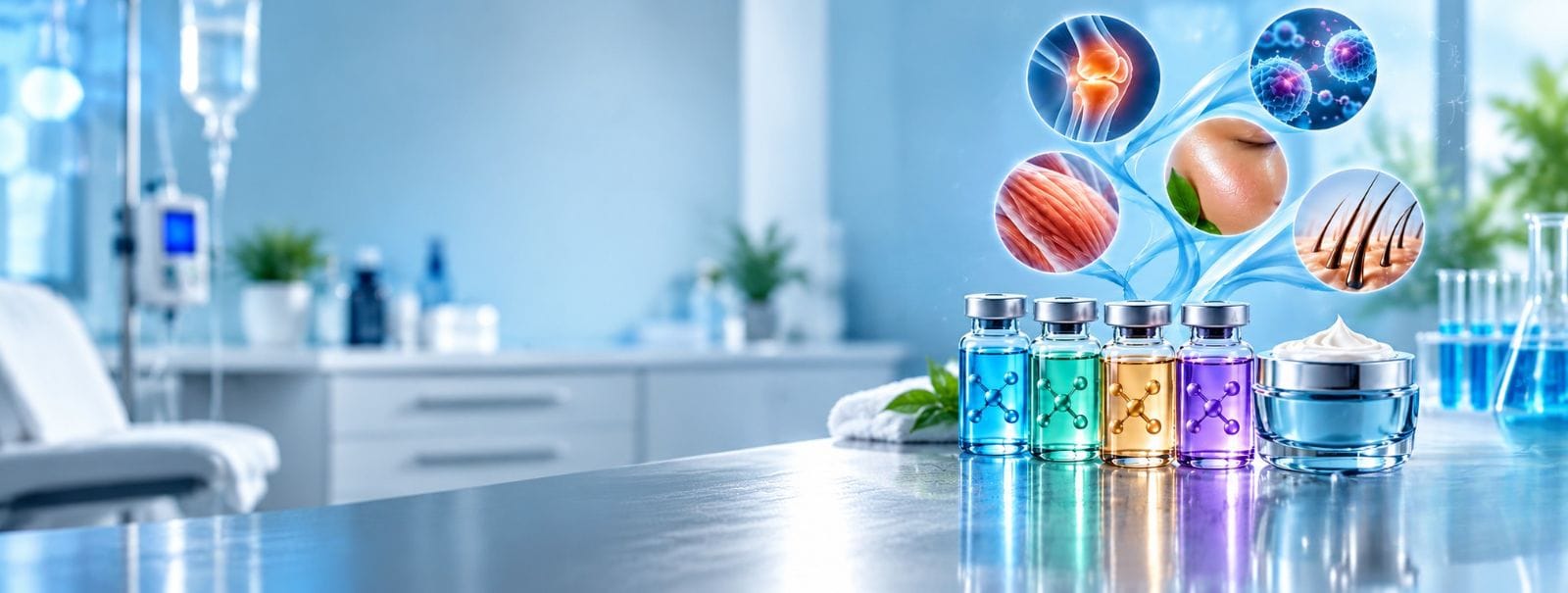
KLOW contains KPV, TB-500, BPC-157 and GHK-Cu.
That is a lot of letters, a few numbers and absolutely no reason for you to need a medical dictionary before we continue.
Most patients do not care about memorizing peptide names. They want to know three things:
What does this do? Why would I use it? And is it actually going to help me?
Fair questions.
KLOW is generally discussed with patients who are interested in supporting recovery, inflammatory balance, tissue repair, gastrointestinal health, skin and connective tissue.
That does not mean I give someone KLOW because their knee hurts and declare the case closed.
Peptides are tools. Sometimes they are useful tools. But they still have to make sense for the person sitting in front of me.
The simplest way I explain peptides is that they act somewhat like short biological messages.
One message may be involved with inflammatory signaling. Another may influence the environment around tissue repair. Another may be involved in collagen or skin remodeling.
When we combine peptides, the goal is not simply to shout four times louder.
It is more like sending several related messages that may support the same larger objective.
And this is where I have to ruin the internet fantasy a little bit.
Biology is not a vending machine.
You do not insert KLOW, push the “repair” button and receive a brand-new shoulder.
Your age matters. Your injury matters. Your hormones matter. Your nutrition, sleep, activity, medical conditions and the reason you are having the problem in the first place all matter.
That is exactly why two people can use the same peptide plan and have completely different experiences.
So let’s break down what is actually inside KLOW.
KPV is a very small peptide fragment related to alpha-melanocyte-stimulating hormone.
You do not need to remember that.
What matters is that researchers have been interested in KPV because of its relationship with inflammatory signaling, particularly in areas such as the skin and gastrointestinal tract. Much of this research is still preclinical, which is why I talk about it as a biological tool we are interested in rather than as a treatment that has been proven to fix a particular disease.
Inflammation itself is not the enemy.
You need inflammation. It is part of how your immune system protects you and how your body begins repairing damaged tissue.
The problem is when the alarm keeps ringing long after the emergency should have been over.
That is part of why KPV is interesting. Researchers are studying how it may influence some of that inflammatory communication.
For certain patients whose recovery seems to involve an excessive amount of inflammatory “noise,” that becomes one piece of the conversation.
TB-500 is commonly discussed in connection with thymosin beta-4, a naturally occurring peptide involved in cellular movement and tissue-repair processes.
Thymosin beta-4 has been studied for functions involving cell migration, tissue protection and wound-repair biology. A great deal of that evidence comes from laboratory and animal research, so again, I am not going to pretend we know everything there is to know about it.
But the concept is fairly simple.
TB-500 does not grab a tiny toolbox and personally repair your tendon.
What interests us is its potential role in supporting the biological environment in which normal repair occurs.
That is why active adults often hear about TB-500 when they start researching recovery, flexibility, connective tissue or stubborn soft-tissue issues.
It is also why I still want to know what is actually wrong before we start throwing peptides at it.
If your shoulder hurts because you have a significant tear, we should probably know that.
Peptides do not replace diagnosis.
If you have spent more than about ten minutes reading about peptides online, you have probably already encountered BPC-157.
Patients commonly ask about it for recovery, connective tissue and gastrointestinal support.
Preclinical research has explored BPC-157 in relation to tissue repair involving muscle, tendon, ligament, gastrointestinal tissue and wound-healing processes. Human evidence remains much more limited than the enormous amount of enthusiasm surrounding it online.
We have already covered BPC-157 in more detail in our previous article, “Heal Faster. Burn Smarter. Recover Like You Used To.”
So I am not going to make you read the same blog twice with a different title.
That is annoying for both of us.
Inside KLOW, BPC-157 is one piece of a larger recovery-focused combination rather than the entire plan.
GHK-Cu is where this conversation starts crossing into a different territory.
GHK is a naturally occurring peptide that binds copper. Researchers have studied GHK-Cu for its relationship with tissue remodeling, fibroblast activity, collagen production and skin repair. More recent reviews continue to find an interesting biological rationale for its use in regenerative and aesthetic medicine, although larger standardized human trials are still needed.
That is why we may discuss GHK-Cu in several different conversations.
GHK-Cu is included in the KLOW blend, but it can also be used separately in a prescription topical cream for appropriate patients.
More on that in a minute.
When you look at the blend as a whole, you can see why these four ended up in the same conversation:
KPV: inflammatory signaling
TB-500: the tissue-repair environment
BPC-157: tissue and gastrointestinal support
GHK-Cu: tissue remodeling, collagen and skin support
You can think of them as approaching recovery from slightly different angles.
If someone tells me:
“My body just does not recover like it used to.”
“I stay stiff for days after doing something that used to barely bother me.”
“I keep trying to get back into exercise, but every time I start, something flares up.”
That is when it becomes reasonable to look at the bigger picture.
Sometimes several related biological signals may make sense instead of focusing on only one.
But let me emphasize something:
Four peptides are not automatically better than one.
Some patients may be better suited to a single peptide. Some may need physical therapy. Some may need hormone or thyroid treatment. Some need imaging. Some need to sleep more than five hours a night.
And sometimes peptides simply are not the answer.
That is why we evaluate the patient rather than selling everyone the same protocol.
We have worked with peptide therapy for years at Recharge, and one thing becomes very clear very quickly:
No two patients respond exactly the same way.
Many patients using recovery-focused peptide plans tell us that they simply do not feel as though soreness and irritation hang around as long.
Some describe easier movement. Some notice less stiffness.
Some tell us they recover more comfortably after exercise or physical therapy.
And one of the things I like hearing most is when someone says:
“I started doing things again.”
Maybe they are walking farther. Maybe they went back to the gym. Maybe they started playing golf again.
Maybe they stopped avoiding an activity because they knew they would pay for it for three days afterward.
For patients whose concerns include gastrointestinal comfort, some report that things simply feel calmer internally or that they feel less irritated and uncomfortable.
Not everyone experiences dramatic results.
Some patients notice gradual changes. Some notice subtle changes. And some notice very little.
That matters too.
If something is not helping you, I want to know that.
We do not assume a treatment worked simply because we prescribed it.
The entire point of individualized medicine is paying attention to what actually happens next.
This is probably one of the most important sections of this entire article.
A peptide is not going to make up for everything else your body needs.
Recovery may also require:
I am not going to pretend a peptide did all the work while physical therapy, nutrition, sleep and the patient’s own effort sat in the corner drinking coffee.
Peptides may help support the biology of recovery.
They do not make good medicine unnecessary.
GHK-Cu does not only appear inside KLOW.
For appropriate patients, GHK-Cu can also be compounded into a prescription topical cream through Recharge RX.
We may discuss topical GHK-Cu with patients concerned about:
GHK-Cu has a particularly interesting body of research around skin remodeling and collagen biology. Human clinical evidence is still limited, but recent reviews have found encouraging signals for skin quality and wrinkle appearance while also making clear that better trials are needed.
And no, this is not a facelift in a jar.
If a cream could lift your neck three inches by Friday, I would have retired and purchased an island by now.
GHK-Cu can also come up in conversations with patients who have acne-prone or inflamed skin, especially adults who are dealing with breakouts and the aftermath they leave behind.
Acne is not just about clogged pores. Inflammation, skin-barrier health and the way the skin repairs itself all play a role. GHK-Cu is interesting because of its relationship with inflammatory signaling, tissue remodeling and collagen production. That does not make it an acne medication in the traditional sense, but it may make topical GHK-Cu a useful part of a broader skin plan for certain patients—particularly when we are also concerned about redness, slow healing, uneven texture or the appearance of acne scars. Research on copper-based topical products has shown encouraging results in acne-prone skin, although the direct clinical research specifically on GHK-Cu for acne is still limited.
Some of our acne patients may use GHK-Cu cream alongside other treatments rather than instead of them. If someone has significant hormonal acne, excessive oil production, clogged pores or cystic breakouts, I still want to figure out why that is happening. That may mean looking at hormones, skincare, medications, diet or other factors rather than simply adding another cream.
Injectable GHK-Cu is a little different. Because it works systemically, patients sometimes notice broader changes in skin quality or inflammation while using peptide therapy, but I would not prescribe injectable GHK-Cu and tell someone, “This is your acne treatment.” We simply do not have strong human evidence to make that claim. If acne improves while the rest of the skin and inflammatory environment are improving, great—but I still treat the acne based on what is actually driving it.
With topical GHK-Cu, the changes patients describe are usually gradual, not dramatic overnight transformations.
Some patients tell us their skin looks smoother.
Others describe better texture, hydration or a healthier overall appearance.
Some say their skin simply looks less dull.
Patients who use GHK-Cu as one part of a hair or scalp program may tell us their hair feels healthier, that shedding appears to decrease or that they begin noticing signs of new growth over time.
I want to be especially careful with the hair conversation.
There is biological and laboratory interest in copper-binding peptides and hair follicles, but the direct clinical evidence for GHK-Cu specifically is still limited. Hair loss is also incredibly complicated. Hormones, thyroid function, nutrition, medications, genetics, stress and medical conditions can all play a role.
So if your hair is falling out because your thyroid is significantly abnormal, putting peptide cream on your scalp while ignoring your thyroid would be missing the point.
Again: figure out why something is happening.
Then decide what belongs in the treatment plan.
Patients sometimes ask:
“Can't I just buy copper peptide skincare online?”
You certainly can buy cosmetic copper-peptide products.
But two containers can both say “copper peptide” on the front and still be very different products.
The formulation matters. The concentration matters. The stability of the ingredient matters. The base it is compounded into matters.
And where you are planning to use it matters.
Research has even highlighted one of the practical challenges with topical GHK-Cu: getting enough of a hydrophilic peptide through the skin barrier can be difficult, which is one reason formulation and delivery matter.
That does not mean every cosmetic serum is worthless.
It means the words on the front of the bottle are only the beginning of the conversation.
Sometimes, yes.
But please do not interpret that as permission to stand in your bathroom and layer twelve aggressive products together because more must be better.
It isn't.
Depending on your treatment plan, GHK-Cu may sometimes be used alongside products such as tretinoin, retinol, vitamin C or exfoliating acids.
Timing becomes even more important around procedures such as:
Your skin barrier can be temporarily compromised after these treatments.
There is even a small randomized trial that evaluated a GHK-Cu skincare regimen following CO₂ laser resurfacing. Patient satisfaction was higher in the GHK-Cu group, but objective measurements did not show faster redness resolution or superior wrinkle improvement, which is exactly the kind of nuance I want patients to understand.
Sometimes something may fit into a post-procedure plan.
That does not mean you should invent your own post-procedure plan.
Follow the instructions of the provider treating your skin.
Prescription GHK-Cu cream is available through Recharge RX.
Recharge RX is a community compounding pharmacy and accepts prescriptions from licensed providers whether or not the patient receives care at Recharge Clinic.
In other words, you do not have to be a Recharge Clinic patient for your licensed medical provider to send an appropriate prescription to Recharge RX.
People who ask us about KLOW or GHK-Cu may be dealing with things such as:
But being interested in a peptide does not automatically mean you need one.
The better question is:
What are we trying to improve, and why is the problem happening in the first place?
That usually gets us much farther.
KLOW contains KPV, TB-500, BPC-157 and GHK-Cu. Each component is discussed for somewhat different aspects of inflammatory signaling, tissue support and repair biology.
No.
Active people certainly ask about recovery peptides, but you do not have to be training for a marathon or lifting twice your body weight to become frustrated with stiffness, soreness or slow recovery.
Whether KLOW makes sense depends on your health, your goals and what is actually causing the problem.
It varies considerably.
Some patients tell us they notice changes relatively early. Others describe a gradual improvement over time. Some do not notice enough benefit to continue.
That variability is exactly why we monitor how you respond instead of promising everyone the same timeline.
No.
Patients may ask about GHK-Cu for overall skin quality, texture, collagen support, certain scar concerns, hair or scalp support.
Whether it makes sense depends on what you are trying to improve and what is causing the concern.
Yes.
Recharge RX is a community compounding pharmacy and accepts appropriate prescriptions from licensed medical providers, including providers outside Recharge Clinic.
KLOW and GHK-Cu are interesting because they allow us to look at recovery from several different directions.
But this is still medicine.
It is not alphabet soup, and it is not magic.
Many of our patients report meaningful improvements in recovery, comfort, skin quality or hair support.
Other people notice more subtle changes.
And some do not respond the way we hoped.
Because peptides work within your biology.
And your biology is uniquely yours.
If you are interested in KLOW, recovery peptides, GHK-Cu, skin or hair support, schedule a FREE consultation with Recharge Clinic.
We see patients in Ocala, Lady Lake/The Villages and Clermont, with Florida telehealth available when clinically appropriate.
Call 352-512-9996 or visit RechargeOcalaClinic.com to schedule your consultation.
For prescription GHK-Cu cream, Recharge RX can also fill appropriate prescriptions from licensed medical providers outside Recharge Clinic.
This article is for general educational purposes only and is not intended to diagnose, treat, cure or prevent any disease or medical condition. Individual responses to medications, compounded preparations and peptide therapies vary. A medical evaluation is necessary to determine whether a particular treatment is appropriate for you. Do not start, stop or change a prescription medication or peptide therapy based solely on information contained in this article.


Monday: 8:00 am - 6:00 pm
Tuesday - Wednesday: 8:00 am - 5:30 pm
Thursday: 8:30 am - 6:30 pm
Friday: 8:00 am - 6:00 pm
Saturday: 7:45 am - 1:00 pm
After-hours appointments can be made.
Walk-ins are welcome.
Monday - Friday: 8:30 am - 5:30 pm
Walk-ins are welcome.
Monday - Friday: 8:30 am - 5:30 pm
Walk-ins are welcome.
Monday - Friday: 8:30 am-5:30 pm
Walk-ins are welcome.
Monday: 8:30 am - 5:30 pm
Tuesday: Telehealth Appts. Only
Wednesday - Friday: 8:30 am - 5:30 pm
Saturday & Sunday: Closed
Walk-ins Welcome
Monday - Wednesday 8 am - 6 pm
Thursday 8 am - 6:30 pm
Friday 8 am - 6 pm
Saturday 7:45 am - 1 pm
$10.50/UNIT
BOTOX
36 UNIT MIN
$3.33/UNIT
DYSPORT
125 UNIT MIN
$600
SINGLE SYRINGE OF FILLER
25% OFF
SKINCARE & SPF
👻BOTOX & BOOs👻
OCTOBER 23
8:30 AM - 5:30 PM
3175 Citrus Tower Blvd, Bldg 3,
Ste B, Clermont, FL 34711
Celebrate Halloween at Recharge
Clinic in Clermont! Grab your friends,
enjoy drinks, and SCARY-GOOD specials!
IN-PERSON SPECIALS ONLY
- PLEASE RSVP BELOW
Recharge Rewards is our way of saying thank you to patients who trust us with their care. The more you visit, the more you earn. Check out how our program works: Click Here
Mondays - NAD+ Shot
Wednesdays - KETO Shot
Fridays - Fitness Freak Shot
SE Ocala 17th St:
Wednesdays – 3 pm - 5 pm
NW Ocala N HWY 27:
Mondays – 2 pm - 5 pm
SW Ocala SW HWY 200:
Tuesdays & Fridays – 2pm - 5 pm
Lady Lake:
Thursdays – 11 am - 3 pm
Clermont:
Mondays, Wednesdays, Thursdays, & Fridays – 2pm - 5pm
47 SW 17th St. , Ocala, FL 34471:
Wednesdays 11 am - 2 pm
3175 Citrus Tower Blvd, Bldg 3, Suite B, Clermont, Fl 37411:
Mondays, Wednesdays, Thursdays, & Fridays 11 am - 2 pm
CLERMONT CLINIC HOURS
Monday - 8:30 AM - 5:30 PM
Tuesday - Telehealth Appts. Only
Wedensday - 8:30 AM - 5:30 PM
Thursday - 8:30 AM - 5:30 PM
Friday - 8:30 AM - 5:30 PM
Walk-ins Welcome
3175 Citrus Tower Blvd, Bldg 3, Ste B, Clermont, FL 34711