
Written by Steve Tieche MD
A woman comes into my office and says, “I don’t know what’s wrong with me. I sleep, but I’m still exhausted.”
As we talk, she tells me she has also been getting winded more easily. Sometimes she feels dizzy when she stands up. Her workouts are harder than they used to be, her hands and feet stay cold, and she has trouble concentrating by the middle of the afternoon.
She has been blaming it on stress, parenting, getting older, or simply having too much on her plate.
Does that sound familiar?
This is one of the first things I think about when a patient tells me she is exhausted: Could her iron be low?
That does not mean everyone who feels tired has an iron deficiency. Fatigue can come from thyroid problems, hormonal changes, poor sleep, nutritional deficiencies, chronic stress, medications, infections, and many other medical conditions.
But low iron is common enough—and can make someone feel bad enough—that we should not overlook it.
Most people know iron has something to do with blood, but they are not entirely sure what it does.
Iron helps your body produce hemoglobin. Hemoglobin is the protein inside your red blood cells that carries oxygen from your lungs to the rest of your body.
Your brain needs oxygen. Your muscles need oxygen. Your heart and every other tissue in your body need oxygen to function properly.
When your iron stores begin to fall, it can feel as though your body is trying to get through the day with a battery that will not fully charge. You may still be functioning, but everything requires more effort.
This nutrient also plays a role in cellular energy, concentration, muscle performance, and recovery. That’s why depleted levels can affect much more than simply feeling tired.
There are a few different stages we need to understand:
This distinction matters because a patient’s reserves may be declining or depleted before her hemoglobin becomes significantly abnormal. In other words, a basic blood count may not always tell the entire story.
We also cannot diagnose iron deficiency based on one number without looking at the bigger picture. Reference ranges can vary, and laboratory results need to be interpreted alongside your symptoms, medical history, diet, menstrual cycle, medications, and other health conditions.
Low iron does not feel exactly the same for every person. Some patients experience mild symptoms, while others feel as though they can barely get through the day.
Possible symptoms can include:
Here is where things can get confusing: none of these symptoms is unique to this condition.
Thyroid disorders, changing hormone levels, poor-quality sleep, stress, burnout, low vitamin B12, low folate, vitamin D deficiency, blood sugar problems, infections, chronic illness, medication side effects, and heart or lung conditions can cause similar complaints.
That overlap is exactly why I do not want patients diagnosing themselves based on a symptom list they found online.
If you are tired, dizzy, or unusually short of breath, we need to investigate—not assume.
Women can develop low levels for several reasons, but menstrual blood loss is one of the most common
If your periods are very heavy, last a long time, occur too frequently, or involve bleeding between cycles, you may be losing iron faster than your body can replace it.
Conditions such as fibroids and endometriosis may contribute to heavier bleeding. Perimenopause can also cause periods to become heavier or less predictable.
Please do not assume that excessive bleeding is “normal” simply because it is common. If you are soaking through pads or tampons very quickly, passing large clots, waking during the night to change protection, or planning your entire life around your period, talk with a qualified medical provider about the bleeding itself.
Replacing iron without addressing continued blood loss is like trying to fill a bathtub while the drain is still open.
Pregnancy and the postpartum period can also place greater demands on a woman’s iron stores. Iron needs increase during pregnancy, and blood loss during delivery can reduce them further. Breastfeeding, closely spaced pregnancies, and trying to care for a newborn while eating irregularly may add to the problem.
Diet can play a role as well. Vegetarian and vegan diets can absolutely be nutritious, but they require thoughtful planning to provide enough absorbable iron. Patients who severely restrict calories, frequently skip meals, or eat very little because of dieting or appetite suppression may also fall short.
Other possible contributors include digestive conditions that interfere with absorption, celiac disease, inflammatory bowel disease, previous bariatric surgery, and certain medications that affect the stomach or increase the risk of bleeding.
Low iron is treatable, but first we need to understand why it is low.
I often see active women assume their declining performance means they are getting older or falling out of shape.
Imagine a woman who normally exercises four or five days a week. A workout she used to complete easily suddenly feels much harder. Her legs feel heavy, her heart rate climbs faster, and she needs more time to recover. She thinks she needs to push harder.
But pushing harder is not always the answer.
High training demands, menstrual blood loss, restrictive eating, and simply not consuming enough nutrition for the amount of exercise performed can all contribute to low iron.
If your body is telling you that something has changed, listen to it. Do not automatically assume you need to work out harder.
Of course new mothers are tired. Their sleep is interrupted, their schedules are completely different, and their bodies are still recovering from pregnancy and delivery.
But we should not dismiss every postpartum symptom with, “You just had a baby. This is normal.”
Postpartum fatigue may be affected by blood loss during delivery, iron deficiency that began during pregnancy, nutritional depletion, thyroid changes, mood disorders, infection, or other medical concerns.
A new mother deserves to be evaluated just as carefully as anyone else. She should not have to struggle for months because everyone assumes exhaustion is simply part of motherhood.
Severe shortness of breath, chest pain, fainting, confusion, heavy uncontrolled bleeding, or rapidly worsening symptoms require urgent medical evaluation. Those are not symptoms to watch at home or wait to discuss at a routine appointment.
One of the most common mistakes I see is assuming that a CBC is all we need.
A complete blood count, or CBC, gives us important information about your blood cells. It includes:
Those numbers help us evaluate for anemia, but a CBC does not always show us how much stored iron remains.
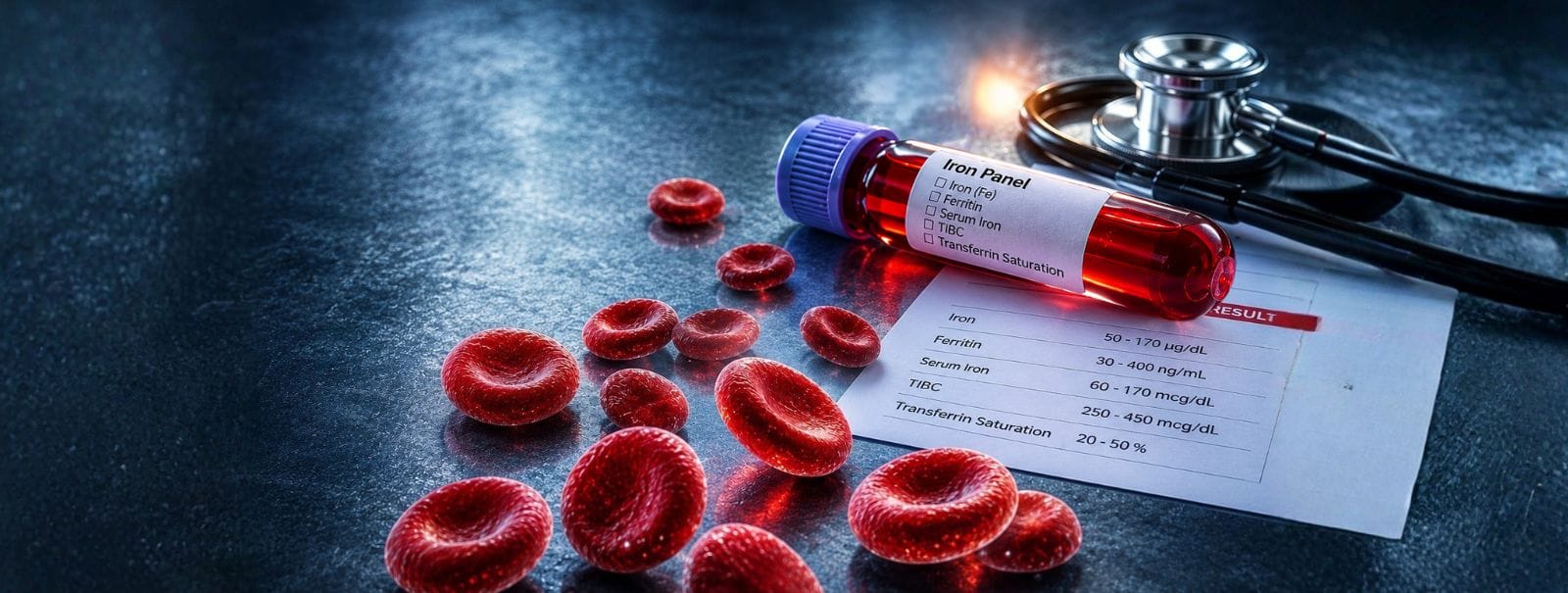
That is why we may also look at:
Ferritin is especially useful, but it is not a perfect stand-alone test. Ferritin can rise with inflammation, infection, liver disease, and other medical conditions. Serum iron can also fluctuate and should not be interpreted by itself.
This is why I look at the numbers together.
There is no single ferritin number that tells the entire story for every patient. We consider the laboratory findings along with symptoms, menstrual bleeding, pregnancy history, nutrition, digestion, medications, inflammation, and other health conditions.
Low iron is a finding. It is not the final explanation.
Once we identify it, the next question should be, “Why is it low?”
Possible causes include:
Heavy menstrual bleeding can cause iron-deficiency anemia, but it may also be a sign of an underlying condition that deserves its own evaluation.
Men, postmenopausal women, and patients who have no clear reason for low iron may need additional evaluation for hidden blood loss or problems with absorption.
I do not say that to frighten anyone. Most patients simply need a thoughtful, step-by-step evaluation. But repeatedly replacing iron without asking why it keeps becoming low is incomplete care.
Recharge Clinic is a full-service medical clinic. We are not simply a place where someone walks in and receives an IV.
We begin with a detailed conversation about what you have been experiencing. Depending on the patient, we may discuss menstrual patterns, pregnancy and delivery history, nutrition, digestion, medications, blood donation, exercise habits, sleep, hormones, and other symptoms.
From there, we can order appropriate bloodwork and evaluate other possible contributors to fatigue, such as thyroid function, hormone levels, vitamin B12, folate, vitamin D, and other clinically appropriate testing.
Once the results are available, a Recharge provider can meet with you in person or through telehealth to explain what the numbers mean and recommend the next steps.
Not every tired patient needs iron. Not every patient with low iron needs an iron infusion. Treatment should be based on the cause, the severity of the deficiency, the patient’s symptoms, medical history, laboratory results, and ability to absorb or tolerate treatment.
That is how individualized medical care should work.
Feeling exhausted, weak, dizzy, or unusually breathless should not automatically be dismissed as part of being a woman, a mother, an athlete, or a busy adult.
Your symptoms deserve to be evaluated.
Iron may be part of the explanation, but the right place to begin is careful testing and medical interpretation—not guessing and not taking high-dose iron on your own.
We want to understand what your body is telling us, identify why the problem developed, and create a plan that makes sense for you.
In the next blog, I’ll speak directly to men taking testosterone therapy. Testosterone can increase red blood cell production, which means some men are advised to donate blood or undergo therapeutic phlebotomy. When blood is removed repeatedly, iron stores may eventually be affected if they are not monitored appropriately.
Yes. Your iron stores can decline before your hemoglobin becomes significantly abnormal. That is one reason a CBC alone may not always tell the entire story.
It can. Iron is essential for making hemoglobin, which carries oxygen. As iron deficiency progresses—especially when anemia develops—some patients experience dizziness, weakness, a faster heartbeat, or shortness of breath with activity. These symptoms can also have other causes, so they should be medically evaluated.
Yes. Ongoing menstrual blood loss can gradually deplete iron stores. However, very heavy, prolonged, or unusual bleeding should also be evaluated rather than treated as something a woman simply has to tolerate.
Athletes may have higher nutritional demands and may not eat enough to support their level of activity. Menstrual blood loss and restrictive diets can increase the risk further. Declining endurance, heavy legs, breathlessness, and slower recovery deserve a closer look.
I generally recommend speaking with a medical provider and getting appropriate testing first unless you have already been given specific instructions. Too much iron can be harmful, and taking iron without understanding the cause may delay the correct diagnosis.
A Recharge provider can meet with you in person or through telehealth to interpret the results, discuss possible causes, and recommend an individualized treatment plan when appropriate. The goal is not just to point out an abnormal number. It is to help you understand what it means and what should happen next.
This article is for educational purposes only and does not replace individualized medical advice, diagnosis, or treatment. Seek urgent medical attention for chest pain, fainting, severe shortness of breath, uncontrolled bleeding, confusion, or rapidly worsening symptoms.


Monday: 8:00 am - 6:00 pm
Tuesday - Wednesday: 8:00 am - 5:30 pm
Thursday: 8:30 am - 6:30 pm
Friday: 8:00 am - 6:00 pm
Saturday: 7:45 am - 1:00 pm
After-hours appointments can be made.
Walk-ins are welcome.
Monday - Friday: 8:30 am - 5:30 pm
Walk-ins are welcome.
Monday - Friday: 8:30 am - 5:30 pm
Walk-ins are welcome.
Monday - Friday: 8:30 am-5:30 pm
Walk-ins are welcome.
Monday: 8:30 am - 5:30 pm
Tuesday: Telehealth Appts. Only
Wednesday - Friday: 8:30 am - 5:30 pm
Saturday & Sunday: Closed
Walk-ins Welcome
Monday - Wednesday 8 am - 6 pm
Thursday 8 am - 6:30 pm
Friday 8 am - 6 pm
Saturday 7:45 am - 1 pm
👻BOTOX & BOOs👻
OCTOBER 23
8:30 AM - 5:30 PM
3175 Citrus Tower Blvd, Bldg 3,
Ste B, Clermont, FL 34711
Celebrate Halloween at Recharge
Clinic in Clermont! Grab your friends,
enjoy drinks, and SCARY-GOOD specials!
IN-PERSON SPECIALS ONLY
- PLEASE RSVP BELOW
Recharge Rewards is our way of saying thank you to patients who trust us with their care. The more you visit, the more you earn. Check out how our program works: Click Here
Mondays - NAD+ Shot
Wednesdays - KETO Shot
Fridays - Fitness Freak Shot
SE Ocala 17th St:
Wednesdays – 3 pm - 5 pm
NW Ocala N HWY 27:
Mondays – 2 pm - 5 pm
SW Ocala SW HWY 200:
Tuesdays & Fridays – 2pm - 5 pm
Lady Lake:
Thursdays – 11 am - 3 pm
Clermont:
Mondays, Wednesdays, Thursdays, & Fridays – 2pm - 5pm
47 SW 17th St. , Ocala, FL 34471:
Wednesdays 11 am - 2 pm
3175 Citrus Tower Blvd, Bldg 3, Suite B, Clermont, Fl 37411:
Mondays, Wednesdays, Thursdays, & Fridays 11 am - 2 pm
CLERMONT CLINIC HOURS
Monday - 8:30 AM - 5:30 PM
Tuesday - Telehealth Appts. Only
Wedensday - 8:30 AM - 5:30 PM
Thursday - 8:30 AM - 5:30 PM
Friday - 8:30 AM - 5:30 PM
Walk-ins Welcome
3175 Citrus Tower Blvd, Bldg 3, Ste B, Clermont, FL 34711